
Authors


Issuance, maturities and spreads: the market is shifting in money market
The money market remains a valuable barometer of liquidity conditions and short-term funding needs. For both issuers and investors, it is a strategic and highly responsive segment, particularly well-suited to an uncertain environment.
This September 2026 bulletin looks back at the main trends observed over recent weeks: changes in issuance volumes, the distribution of traded maturities, spread dynamics, and the outlook in a market driven by uncertainty.
Issuance volumes
Outstanding money market instruments issued by European entities reached nearly $1,359bn in August across all currencies:
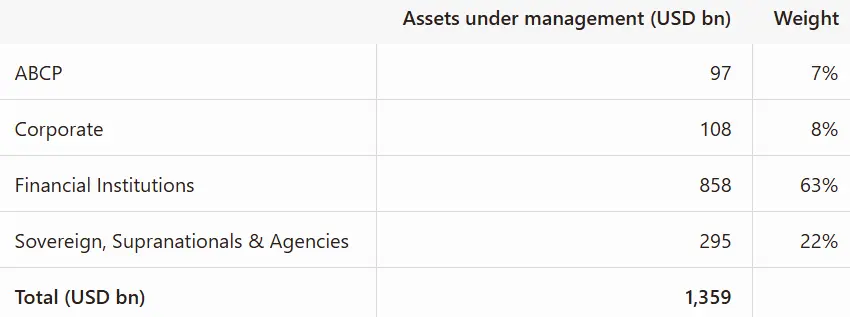
Source : CMD, data as of 31/08/2026
In the NEU CP segment, supervised by the Banque de France, outstanding amounts stood at €301bn in August, confirming its status as Europe’s leading short-term euro-denominated refinancing market.
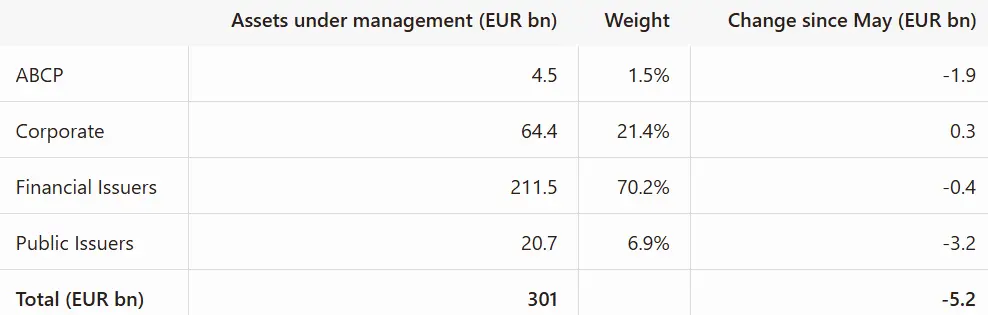
Source : Banque de France, data as of 31/08/2026
Key developments in the euro market
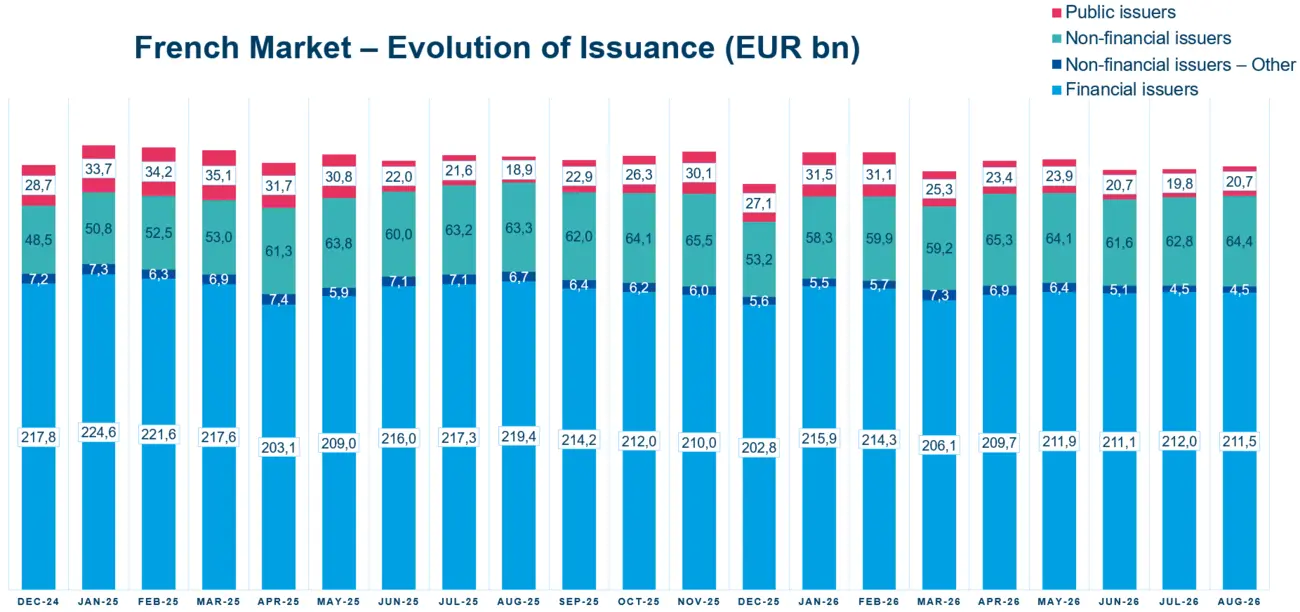
Source : Banque de France, as of 31/08/2026
| AGENCIES | Agencies significantly reduced their outstanding amounts in June and again in August. This represents a decline of around €3bn versus the second quarter and €10bn since the start of the year. è This move comes in the context of significant front-loading in the first quarter, notably linked to adjustements resulting from the adoption of the 2026 Finance Act. | |
CORPORATES | Corporates continue to issue at a sustained pace. Their outstanding amounts have remained comfortably above €64bn since April, or around €6bn higher than at the beginning of the year. è Money market instruments continue to fulfil their role as a flexible and reactive financing tool, well suited to operational cash management needs. | |
BANKS | Banks remain the market’s major players. They account for nearly 70% of total volume. è For these issuers, money market instruments remain a core instrument for managing liquidity and regulatory ratios, especially LCR and NSFR. |
Maturities traded
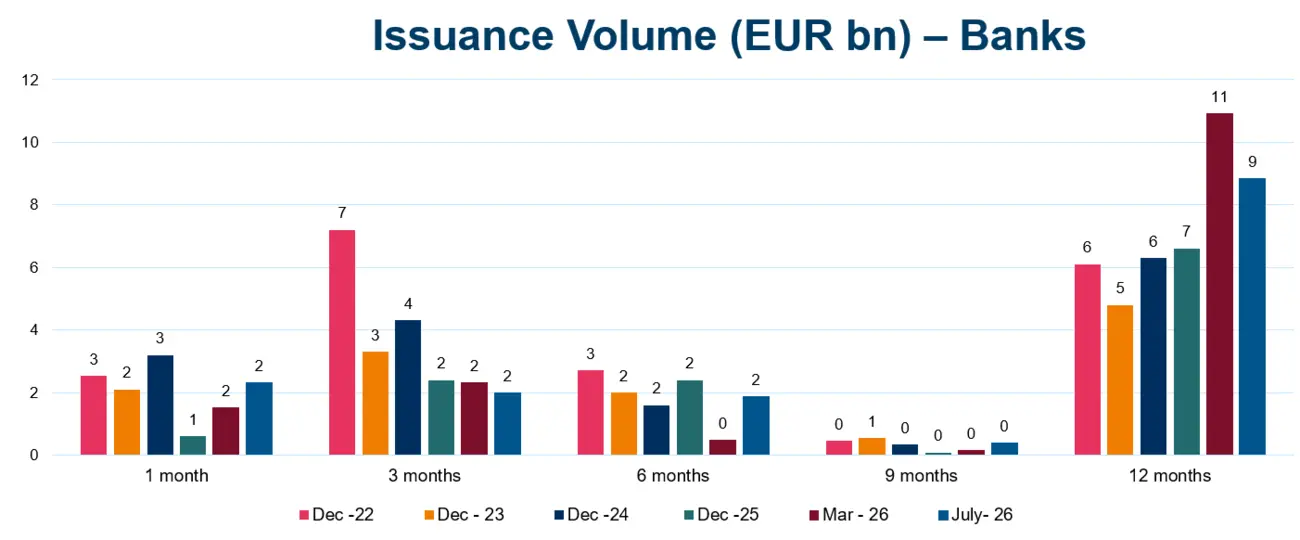
Source : Banque de France, as of 31/08/2026
Source : Banque de France, as of 31/08/2026
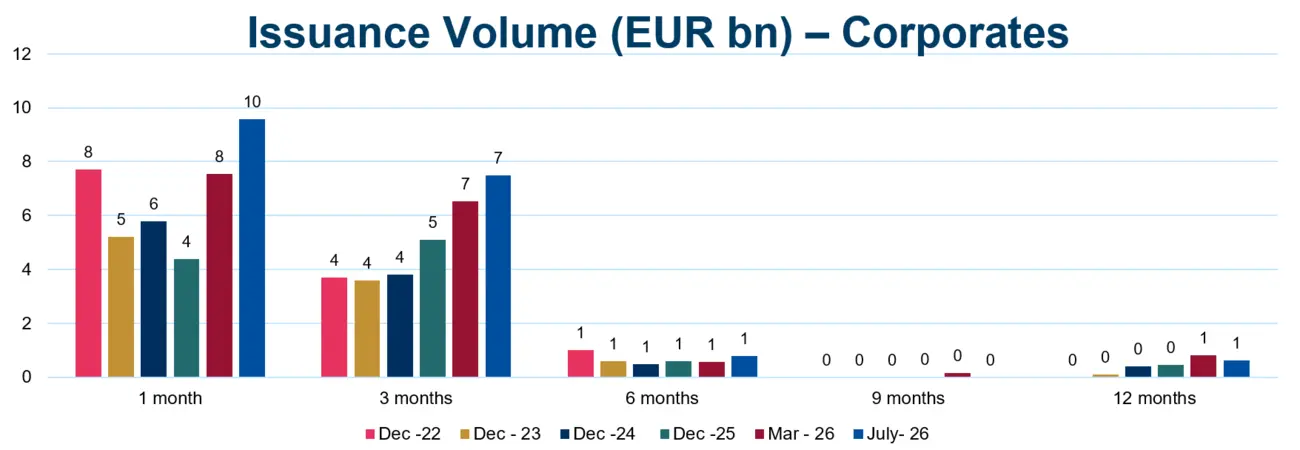
The distribution of issuances by maturity remains clearly differentiated across issuer types:
- Corporates mainly issue in the 0–3 month bucket
- Banks tend to favour maturities beyond 6 months
That said, corporates have been more active than usual in the 0–3 month segment. Two factors may help explain this:
- Demand from money market investors, particularly MMFs, has remained concentrated in shorter maturities. In an environment where the maturity/spread combination remains attractive, corporates have been able to tap into this pool of demand.
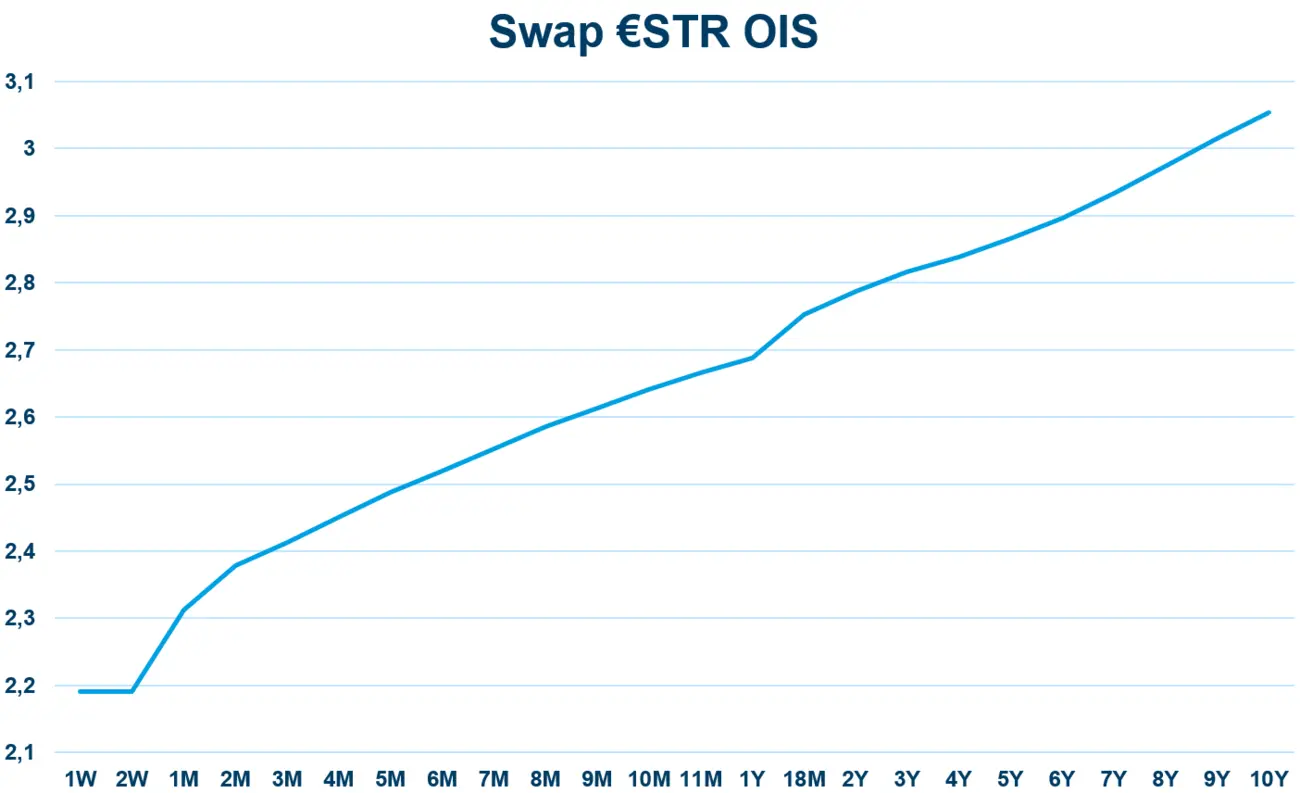
- The steeper yield curve continues to make short-term funding relatively more attractive than longer-dated funding.
Source : Bloomberg, as of 31/08/2026
Spread dynamics
For investors, the trade-off between yield, liquidity and safety remains central to allocation decisions. In this context, spreads are a particularly useful indicator of market conditions.
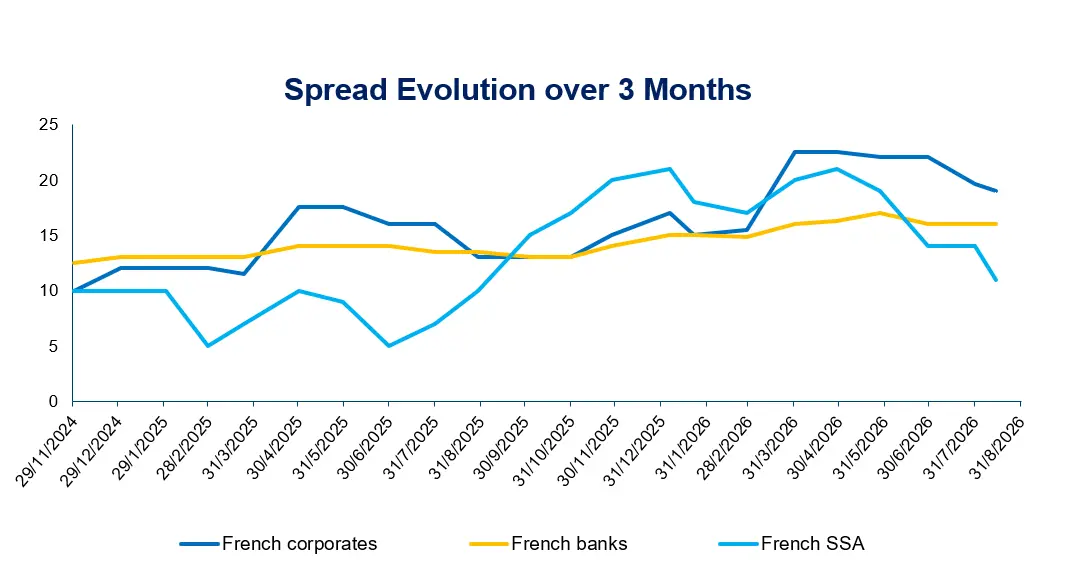
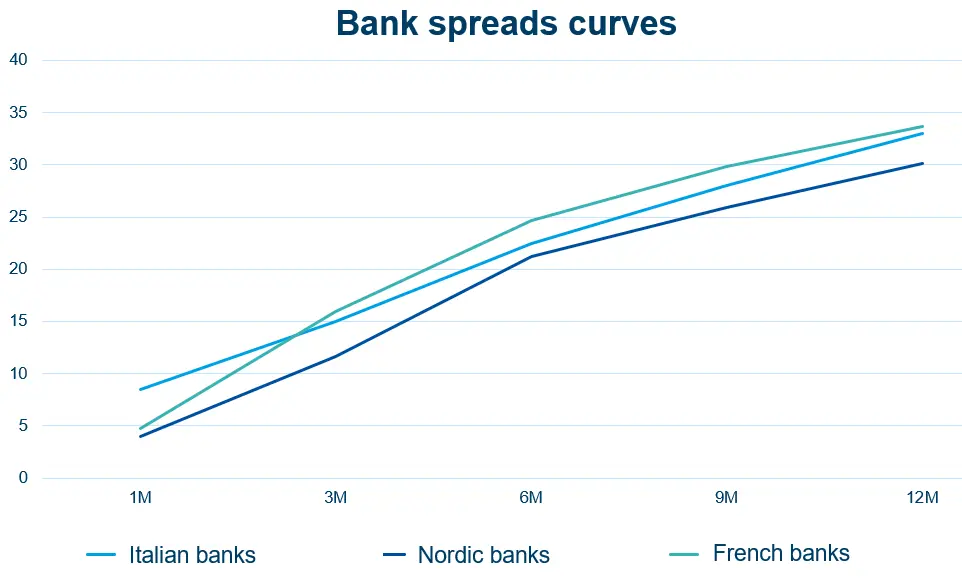
Since June, the market has been moving through a gradual normalization phase, with a return to a more traditional hierarchy of risk premia. At the 3-month tenor, banks are funding at around €STR +16bps, while sovereign agencies and similar issuers are now trading on average at €STR +11bps. Corporates, meanwhile, need to offer a higher premium to attract demand, with issuance levels close to €STR +20bps on this tenor.
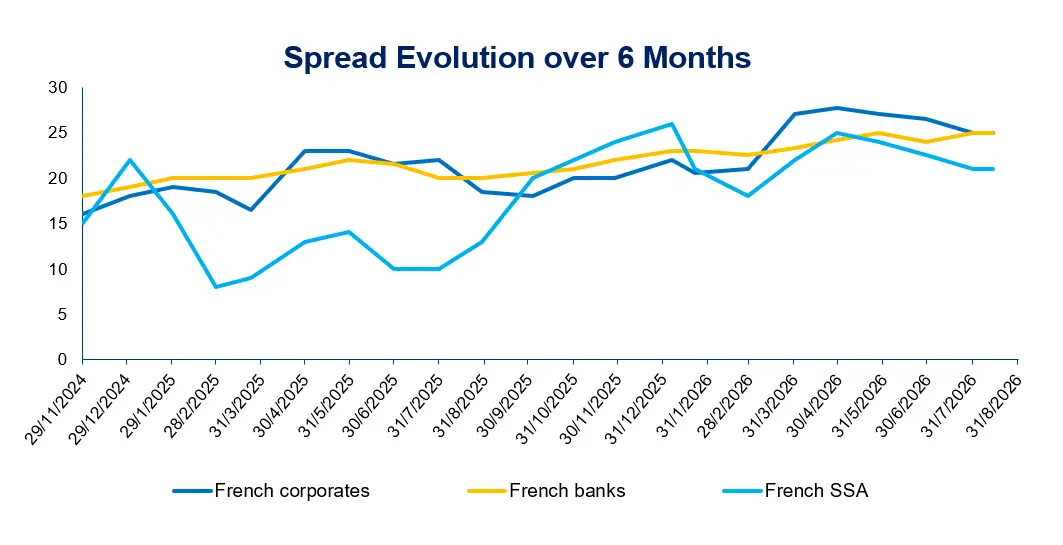
This selective demand encourages issuers wishing to extend maturities to steepen their spread curves. This is particularly visible among bank issuers at 6 months, where they are offering on average €STR +25bps, an additional 3bps compared with the first quarter.”
|
|
Source : Amundi Money Market Investment Strategy as of 21/08/2026
Spread evolution
Source : Amundi Money Market Investment Strategy as of 21/08/2026
Source : Amundi Money Market Investment Strategy as of 21/08/2026
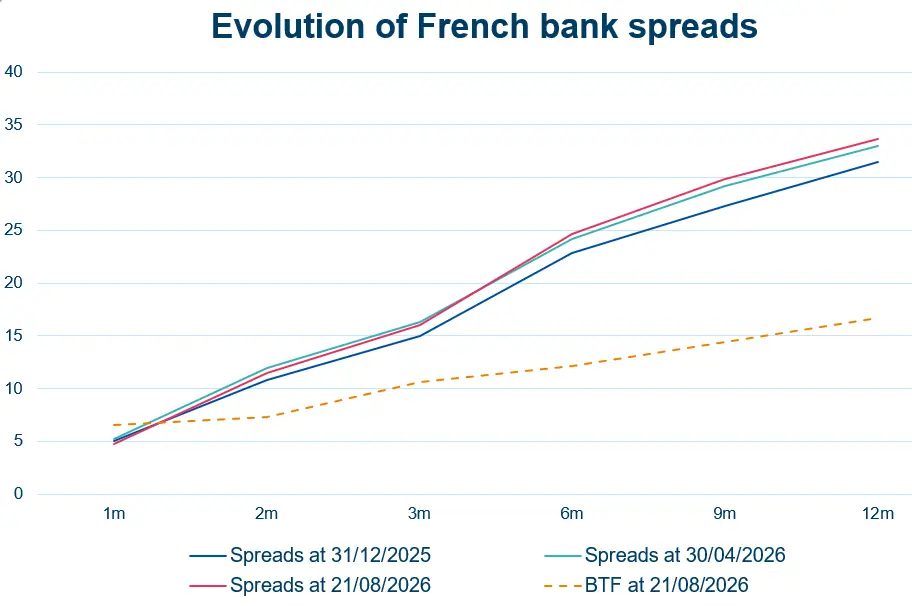
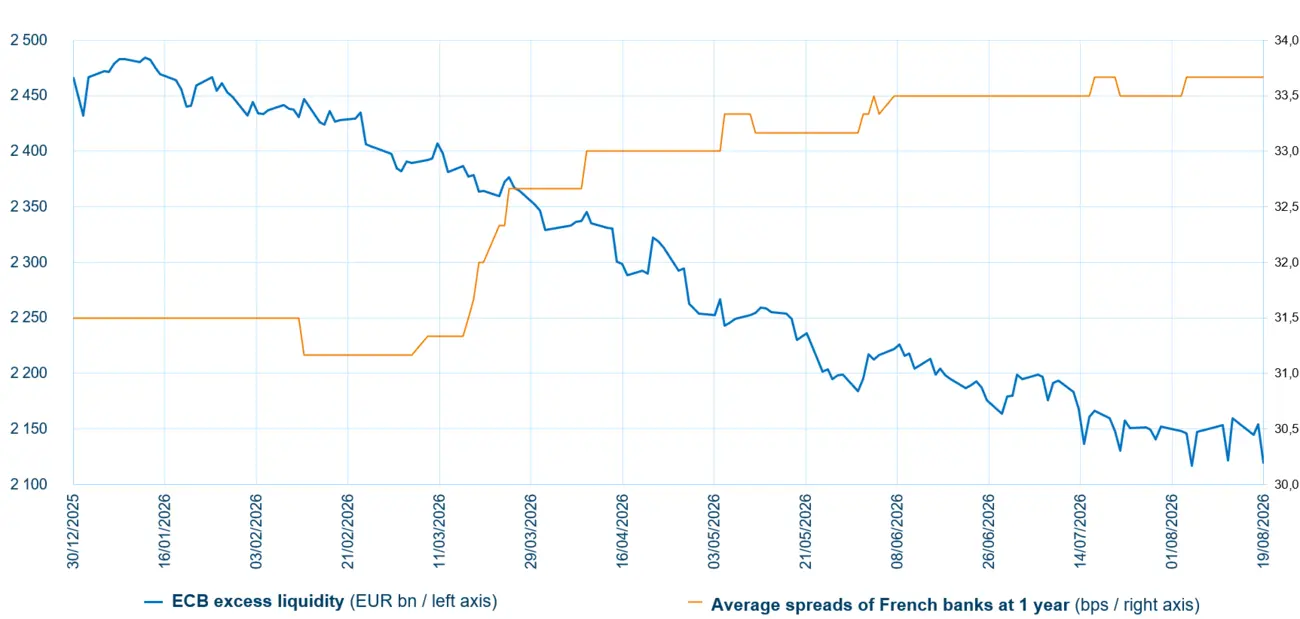
We observe a steepening of the spread curve versus €STR. To better understand this widening, we can look at developments in excess liquidity in the euro area. Since the start of the year, it has fallen by around €340bn, to just over €2,100bn in mid-August.
Excess liquidity and bank spreads over one year since the start of the year
Source Bloomberg / Amundi Money Market Investment Strategy
This trend needs to be monitored. If banks were to rely more heavily on market funding to replace central bank liquidity, it could generate renewed upward pressure on their spread curves.
Policy rates and the French budget: towards a new widening of spreads?
In 2026, the ongoing conflict in the Middle East continues to fuel uncertainty and volatility in markets, with visible repercussions on energy prices and on inflationary pressures.
Against this backdrop, the ECB raised its policy rates by 25 bps in June and remains attentive to developments in medium-term inflation expectations. The market is now pricing in two additional rate hikes by year-end.
In addition, tensions around France’s sovereign position could affect the level of the BTF (the 1-year tenor trades at the equivalent of €STR +17bps, or +3bps versus June), and by extension that of agencies, whose issuance activity is closely tied to the state budget.
In such a scenario, another phase of spread widening could also affect other issuer types, notably banks and corporates.
Money market funds: still a strategic asset class for liquidity management.
Money market fund yields are gradually adjusting to the new rate environment. In a market still marked by considerable uncertainty, expectations continue to leave room for further ECB rate hikes in the coming months.
In this context, money market funds remain highly relevant: they offer flexible, resilient and responsive liquidity management, while helping to protect investors from market volatility.
More than ever, they stand out as a key source of short-term financing for the economy, capable of supporting different phases of the cycle and adapting to changing market conditions.
Need clarification on the money market?
Discover our solutions