
Summary
Highlights
The energy crisis is increasing the need for green transition investment. On 3 June, the European Commission announced additional fiscal flexibility for energy security investments.
This conviction is not without historical precedent: for instance, the 1973 oil crisis led France to expand its nuclear energy program.
Overall, a well-planned green transition may help build economic resilience and improve energy security. In the process, investors would come across long-term opportunities.
In this edition
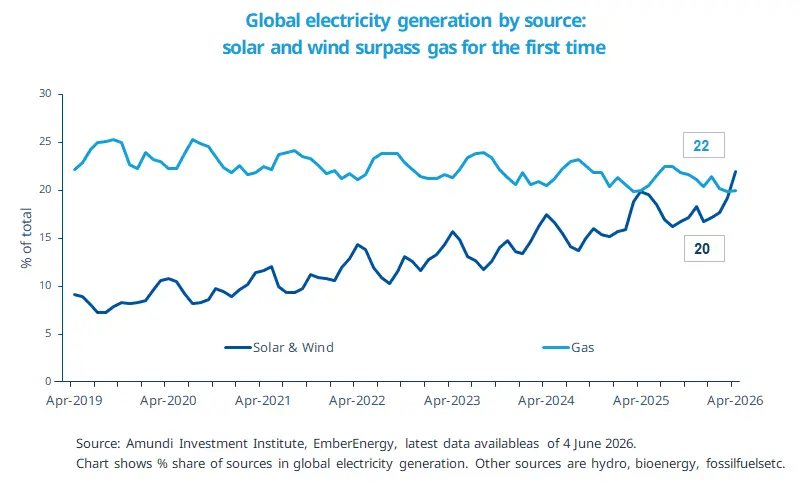
The ongoing energy crisis is exposing the vulnerabilities associated with imported energy, particularly in Europe and Asia. Most countries have implemented targeted measures in the form of tax cuts and subsidies on fuel. Additionally, the EU has given member states greater fiscal room to support households and businesses in reducing their reliance on fossil fuels. While investments in the green transition are beneficial from an environmental perspective, they also enhance energy security and improve long-term economic resilience. Already, the share of solar and wind in global electricity generation has increased substantially (22% in April 2026), as shown in the chart. Looking ahead, proponents of green energy will draw support from the limited control that energy consumers have over fossil fuel supply and will likely highlight the reliability of domestically produced energy. The crisis is therefore likely to accelerate the transition towards clean energy and create investment opportunities across the value chain globally.
Key dates
US CPI, Canada policy rate, China PPI and CPI |
ECB Policy Rate, US PPI, Turkey policy rate |
Japan Industrial Production, UK Industrial Production, US Consumer Confidence |
Read more